
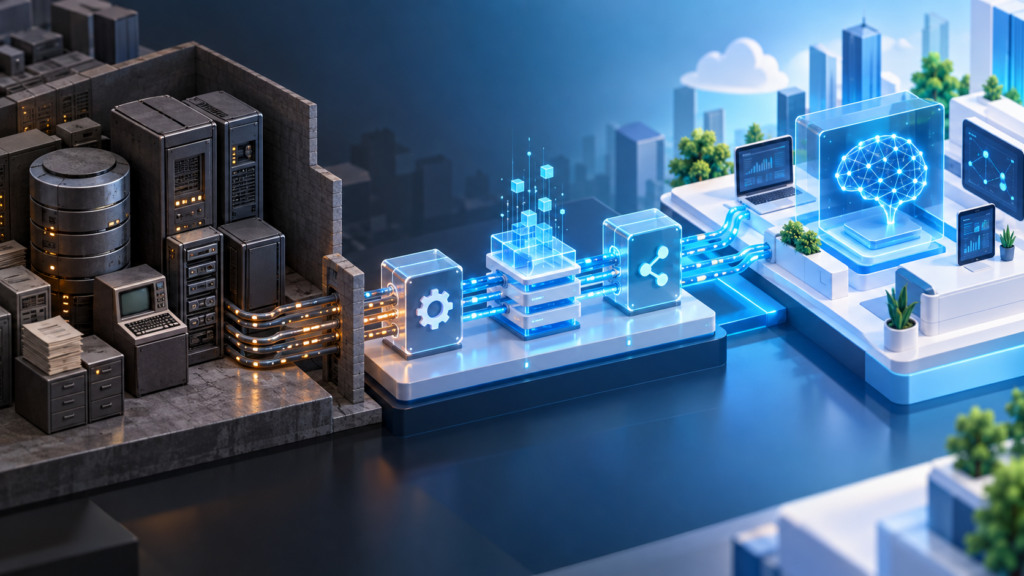
Many businesses want AI features but depend on older applications that were never designed for modern integrations. Replacing those systems all at once is expensive and risky. A better approach is to modernize around the business outcomes that matter most.
Begin with an application and data inventory
Document the systems, databases, workflows, owners, dependencies, and compliance requirements involved in the target process. Identify where the authoritative data lives, how often it changes, and which rules are hidden in manual workarounds.
Choose a focused modernization boundary
Start with one workflow that has clear value, such as document processing, customer support, reporting, or internal search. Avoid connecting an AI system to every legacy database before the access model and data quality are understood.
Expose stable interfaces
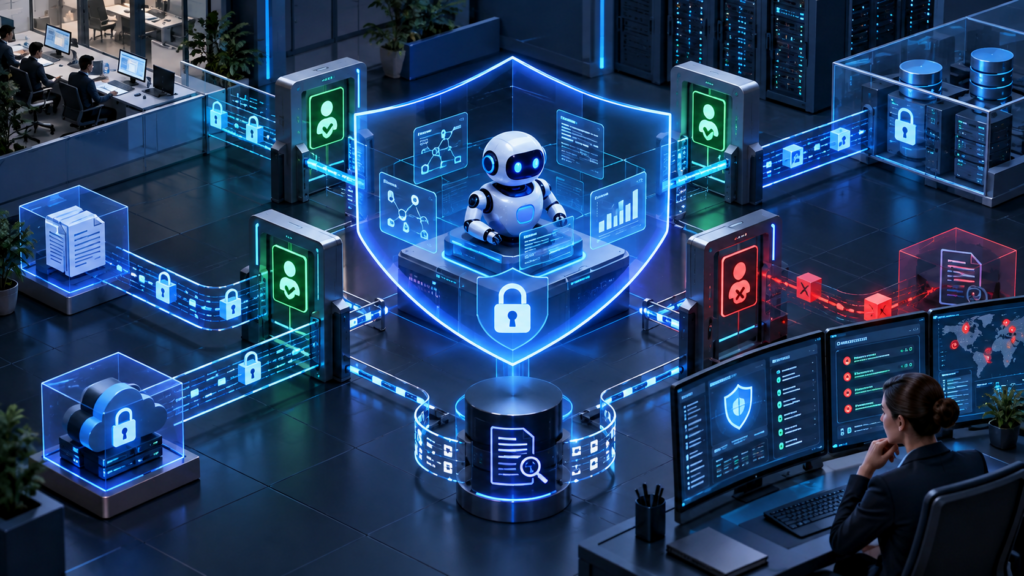
Use APIs, event queues, or carefully designed integration services to create a controlled boundary around older software. Keep business rules close to the system of record and make new actions observable. A clean interface reduces the temptation to let an AI system write directly to a fragile database.
Prepare the data foundation
AI features depend on accurate, well-structured, permission-aware data. Remove duplicates, define ownership, standardize important fields, and create a process for correcting bad information. Search and retrieval quality are often more important than the model chosen.
Deliver in measurable increments
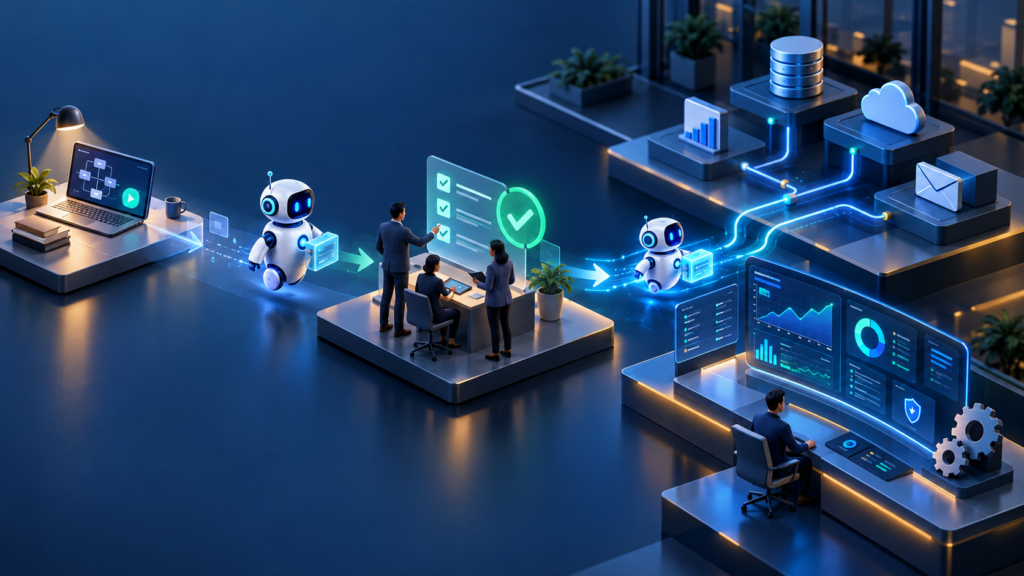
- Assess: map the current architecture and priority workflow.
- Stabilize: add logging, backups, tests, and access controls.
- Connect: build a small integration layer or API.
- Augment: introduce an AI feature with human review.
- Measure: compare speed, quality, cost, and user adoption.
- Expand: reuse proven patterns across adjacent workflows.
Plan for coexistence
Modernization is rarely a single finish line. Legacy and modern components may operate together for years. Design for graceful failure, clear ownership, versioned interfaces, and rollback. This protects business continuity while the technology evolves.
The goal is not to make old software look new. The goal is to make valuable business capabilities easier to use, safer to change, and ready for modern automation. An incremental roadmap creates evidence before major investment and lowers the risk of transformation.
Put these ideas into practice
Explore where AI could help your business.
Discuss your workflow, available data, and the result you want before deciding what to build.