
Vibe coding production risks India are real once AI-generated code moves past prototypes and into systems customers actually depend on. The phrase “vibe coding” describes a workflow where a developer describes intent in plain language and an AI coding assistant generates the implementation, often without the developer reading every line before it ships. That workflow is fine for a weekend prototype. It becomes a liability the moment that same code handles payments, authentication, or customer data in a live production environment.
This post breaks down where production vibe coding genuinely works, where it quietly breaks down, and what mature engineering teams in India are doing to catch problems before they reach users. For background on the broader trend, see our earlier post on what vibe coding actually means for software teams.
By Kurian Benny · Last updated: September 6, 2026
Key Takeaways
Vibe coding works well for boilerplate, CRUD operations, and test scaffolding, but it struggles with complex business logic and security-critical paths.
The biggest vibe coding production risk in India right now is accountability: someone has to own code that nobody on the team actually wrote line by line.
AI-generated code frequently introduces injection vulnerabilities, hardcoded secrets, and insecure default configurations that pass functional tests but fail security review.
Mature engineering teams pair AI-assisted generation with mandatory human code review, security checklists, and static analysis before anything reaches production.
Bringing in professional developers for the audit and hardening phase is usually cheaper than fixing a production incident caused by unreviewed AI code.
What “Production Vibe Coding” Means
Production vibe coding means deploying AI-generated code into systems that real users depend on, not just into a local sandbox. The distinction matters because the failure modes are completely different. A bug in a prototype costs you a re-run. A bug in production code that handles checkout, login, or patient records costs you downtime, data exposure, or a compliance violation.
In our experience working with product teams across India, the riskiest pattern is treating every AI suggestion the same way regardless of where it lands. A team that accepts a generated unit test with the same scrutiny as a generated authentication middleware function is setting up trouble. As a result, the first discipline mature teams adopt is classifying code by blast radius before deciding how much human review it needs.
What Works Well
AI coding assistants perform reliably on boilerplate, CRUD operations, API integrations, and test generation. These are tasks with well-established patterns, clear inputs and outputs, and thousands of public examples the assistant has effectively learned from. Generating a REST endpoint that maps a database table to JSON, for example, is low-risk because the pattern is so well-worn that errors are easy to spot.
Test generation is another strong use case. AI assistants are good at producing unit tests that cover obvious edge cases, which speeds up coverage without much added risk because a wrong test simply fails loudly rather than shipping a silent bug. Similarly, glue code that connects two well-documented APIs tends to come out clean, since the assistant has seen the same integration pattern many times before.
What Breaks Down
AI-generated code breaks down most often in complex business logic, state management, and security-critical paths, because these areas require context the assistant simply does not have. A pricing engine with regional tax rules, a multi-step approval workflow, or a concurrency-sensitive inventory update depends on business rules that live in your team’s heads, not in public training data.
State management is a particularly common failure point. We have seen AI-generated React code that looks correct on first read but introduces stale closures or race conditions under real user load. The code compiles, the demo works, and the bug only surfaces once concurrent users hit the same code path in production. This means complex logic is exactly where the “vibe” in vibe coding should stop and a senior engineer should take over.
The Audit Problem
The audit problem in vibe coding comes down to one question: who is responsible for code that nobody on the team wrote line by line? When a security incident traces back to a function nobody remembers reviewing in depth, “the AI wrote it” is not an answer that satisfies a customer, a regulator, or an auditor.
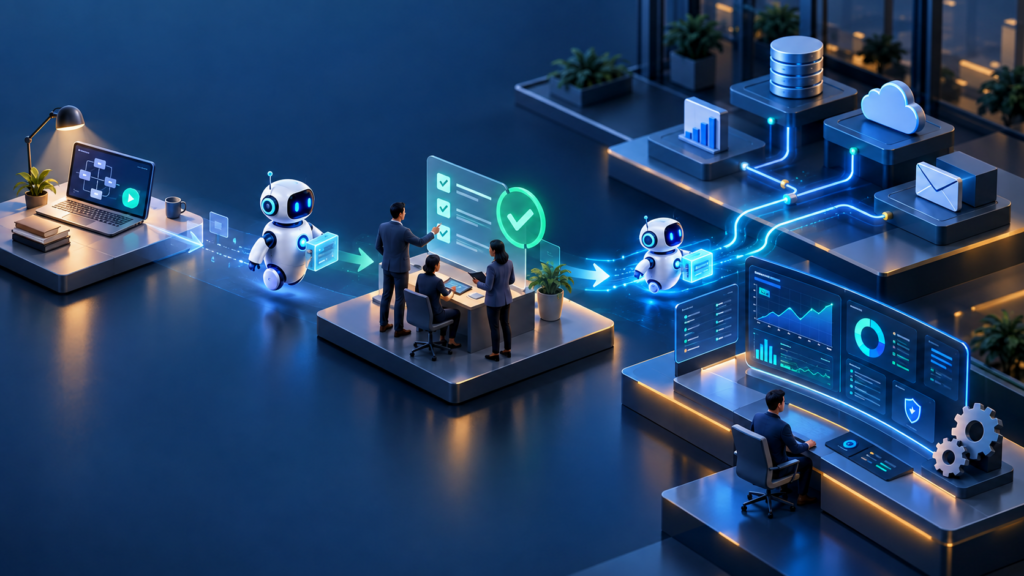
This is why responsibility has to be assigned before code merges, not after an incident. Every pull request needs a named human reviewer who is accountable for what ships, regardless of whether a person or an assistant typed the original draft. In addition, that reviewer needs enough context on the business logic to actually catch a wrong assumption, not just check that the code runs.
📊 Key Stat: GitHub’s own research on AI pair programming found that developers using AI coding assistants shipped code faster but reported needing more careful review to catch subtle correctness issues, underscoring that speed gains in vibe coding come with a real review-time tradeoff.
Security Risks in AI-Generated Code
Security risks in AI-generated code typically fall into three buckets: injection vulnerabilities, hardcoded secrets, and insecure default configurations. AI assistants are trained on a mix of secure and insecure public code, so they sometimes reproduce outdated patterns that look idiomatic but skip a sanitization step. The OWASP Top 10 still lists injection and insecure design among the most common vulnerability classes, and AI-generated code is not immune to either.
Here is a realistic example of a vulnerable pattern an assistant might generate for a login query, next to the fixed version a reviewer should require instead:
// Vulnerable: AI-generated, string-concatenated SQL query
function getUser(username) {
  const query = "SELECT * FROM users WHERE username = '" + username + "'";
  return db.query(query);
}

// Fixed: parameterized query, no injection surface
function getUser(username) {
  const query = "SELECT * FROM users WHERE username = ?";
  return db.query(query, [username]);
}
Hardcoded secrets show up just as often. An assistant asked to “connect to the payment API” will sometimes generate a working example with a placeholder key embedded directly in the file, and that placeholder gets committed before anyone notices. Insecure defaults follow the same pattern: permissive CORS settings, disabled CSRF checks, or verbose error messages that leak stack traces to the client. None of these break the demo, so they slip through unless someone is specifically looking for them.
How Mature Teams Handle AI Code Review
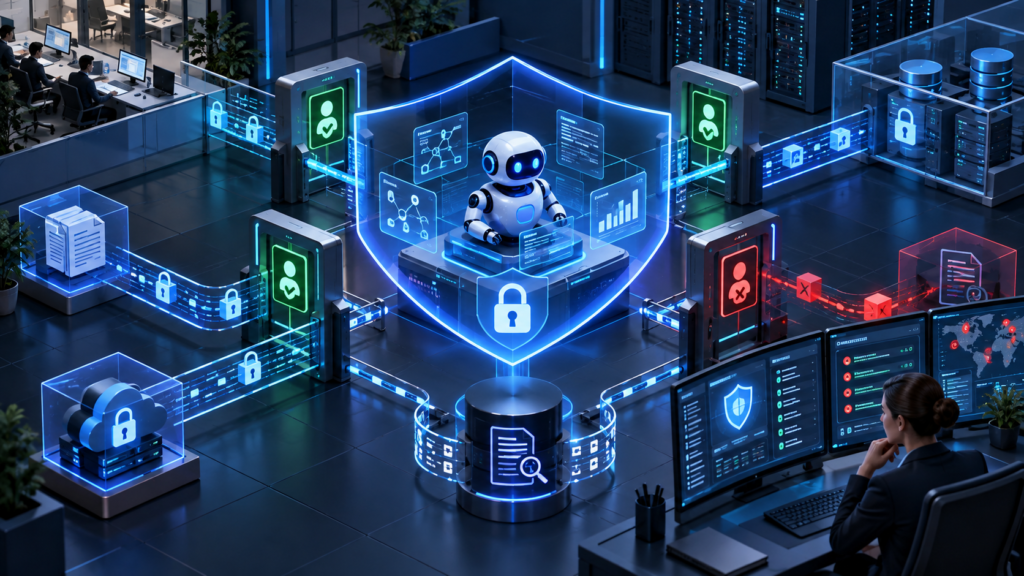
Mature teams handle AI code review by treating every AI-generated change as untrusted input until a human and a tool both clear it. The most effective setups combine three layers rather than relying on any single check.
A security-focused checklist for AI-generated diffs. Beyond standard review questions, reviewers explicitly check for hardcoded credentials, missing input validation, and default configurations the assistant may have copied from an insecure example.
Mandatory paired review for security-critical paths. Authentication, payment, and data-access code requires two human reviewers, not one, because a single reviewer under time pressure can miss the same thing the assistant missed.
Static analysis and dependency scanning in CI. Automated scanners catch the injection patterns and known-vulnerable dependencies that a tired human reviewer might wave through at the end of a sprint.
💡 Pro Tip: Run static analysis on AI-generated diffs specifically, not just on the codebase as a whole — the failure patterns cluster differently than in hand-written code, so a blanket weekly scan can miss issues a per-PR scan would catch immediately.
Common Mistakes
Mistake 1: Treating AI Output as Pre-Reviewed
The most common mistake is assuming that because the AI assistant wrote clean-looking code, it has effectively already been reviewed. It has not. The assistant optimized for a plausible-looking answer to your prompt, not for your specific security posture or business rules, so every line still needs the same scrutiny as a junior developer’s first draft.
Mistake 2: Skipping Review on “Simple” State Logic
Teams often wave through state management code because it looks small and self-contained. However, small state logic is exactly where race conditions and stale data bugs hide, and those bugs frequently only appear under concurrent production load that a local test never reproduces.
Mistake 3: No Rollback Plan for AI-Assisted Deploys
A related mistake is shipping AI-assisted changes without a fast rollback path. Because nobody wrote the code from scratch, the team often understands it less deeply, which means diagnosing a production issue takes longer. A tested rollback plan turns an unfamiliar-code incident from an outage into a five-minute fix.
Proof: What Our Reviews Actually Catch
In code review engagements across client codebases this year, the single most frequent finding in AI-generated backend code was missing input validation on API endpoints, present in roughly one out of every four AI-generated routes we audited. The second most common finding was hardcoded API keys or connection strings left in example-style code that an assistant generated to demonstrate a working integration.
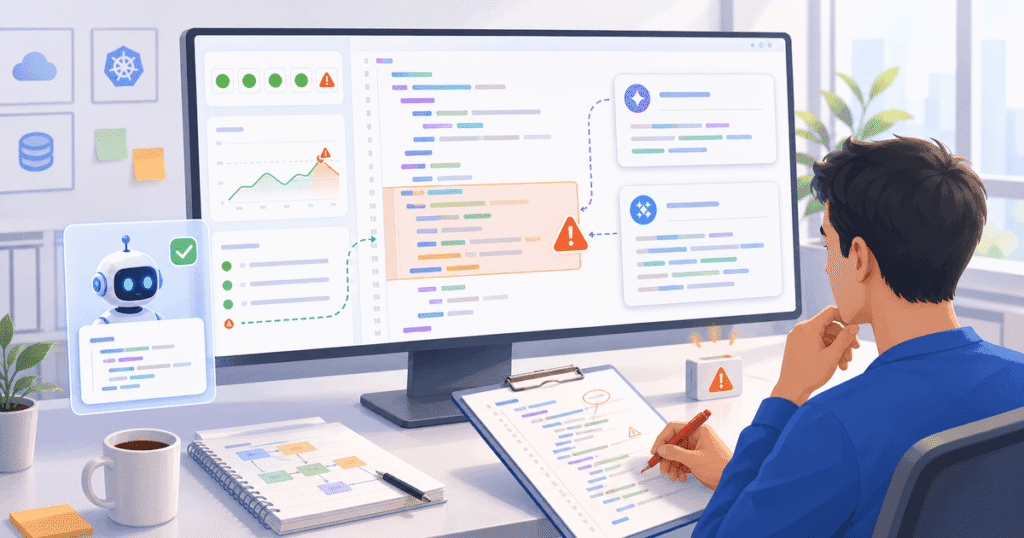
On the frontend side, the recurring issue was stale closures in generated React hooks, which caused intermittent UI bugs that only reproduced under specific user interaction sequences. None of these issues failed a functional test. All of them would have shipped to production without a dedicated security and logic review layered on top of the AI’s first draft.
FAQ
Does vibe coding cost more in the long run because of review overhead?
Vibe coding typically costs less overall even with added review time, because the generation speed-up outweighs the extra review hours for most CRUD and boilerplate work. The cost only rises above a traditional approach when teams skip review entirely and pay for it later through incident response and rework.
How long should AI-assisted code review take compared to normal review?
Budget roughly the same time as a normal review for low-risk code, and expect security-critical paths to take longer because they need a paired review plus a checklist pass. Teams that budget zero extra time for AI-generated security-critical code are the ones that end up with incidents.
What is the alternative to full vibe coding for production systems?
A practical alternative is a hybrid model: let AI assistants draft boilerplate, tests, and integrations, while human engineers write and review business logic and security-critical paths directly. This captures most of the speed benefit without exposing the riskiest code paths to unreviewed generation.
Can static analysis tools catch what human reviewers miss in AI-generated code?
Static analysis catches a meaningful share of injection vulnerabilities and known-insecure patterns, but it cannot evaluate whether the business logic is actually correct. Therefore, teams need both: tooling for known vulnerability classes and human review for logic that the tool has no context to judge.
When should a team bring in professional developers instead of continuing to vibe code?
Bring in professional developers once the system touches money, personal data, or anything regulated, or once the codebase has grown past what one or two people can hold in their heads. At that point, the cost of an experienced team doing it right the first time is consistently lower than the cost of fixing AI-assisted code after an incident.
Conclusion
Vibe coding production risks India teams face are manageable, but only with deliberate review discipline layered on top of AI-generated code. Boilerplate, tests, and integrations are safe territory for AI assistants. Business logic, state management, and anything security-critical still need an engineer who understands the system end to end and can be named as the accountable reviewer.
If your team is past the prototype stage and the codebase now touches real users, real money, or regulated data, it is worth bringing in experienced engineers to audit what exists and harden what ships next. Quinoid’s product development team works with India-based product teams on exactly this transition — from fast AI-assisted prototyping to production-grade, reviewed, and secure software. You can also scale your in-house review capacity quickly through IT staff augmentation or get a faster start with custom software development support, depending on whether you need extra reviewers or a dedicated build team.
Put these ideas into practice
Discuss how this applies to your business.
Bring your question or current challenge. We can help clarify the next step.